Profile Sanding: From Industrial Process to Luxury Asset Creation
Introduction
In the world of plywood manufacturing and wood processing, surface finishing is where quality meets profitability. A machine that can deliver consistent, mirror-smooth surfaces across varying plywood profiles isn’t just equipment—it’s a competitive advantage.
Kumar Engineering India Pvt Ltd has carved a reputation for manufacturing robust, high-performance profile sanding machines that have become industry standards across India’s plywood and woodworking sector.
At NEST (Noble Engineering Services & Technology), we service and support Kumar’s machinery, giving us insider knowledge of why these machines are trusted by hundreds of manufacturers. This blog explores what makes Kumar Engineering’s profile sanding machines indispensable.
What is a Profile Sanding Machine?
The Basics
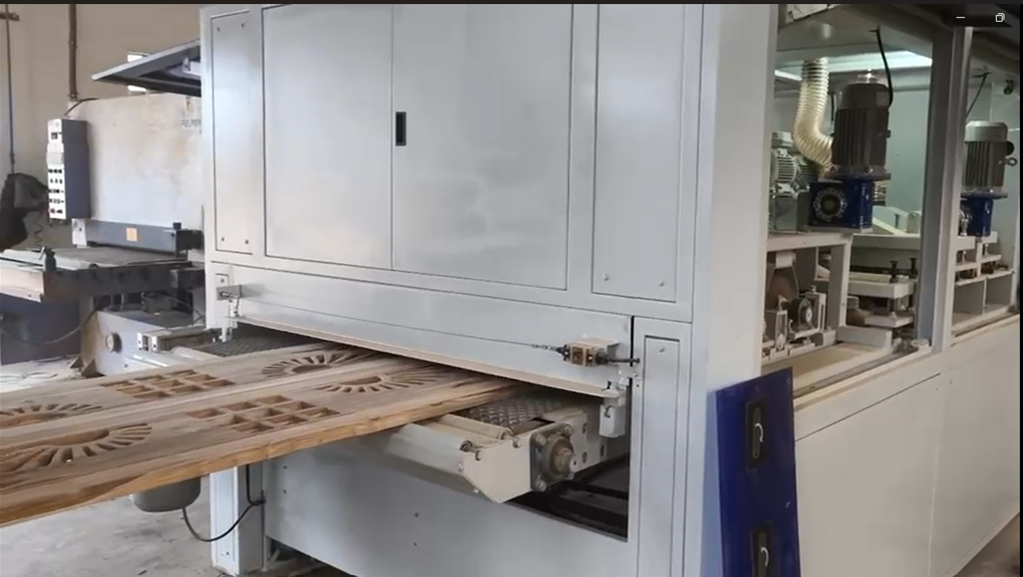
A profile sanding machine is a specialized woodworking tool designed to sand curved, contoured, and irregular surfaces on plywood, MDF, and other engineered wood products. Unlike flat-bed sanders that handle only planar surfaces, profile sanders excel at:
- Curved edges and contours (decorative moldings, curved veneers)
- Complex geometries (shaped panels, curved laminates)
- Varied thicknesses (graded sanding from coarse to fine)
- High-volume production (consistent output without manual intervention)
Why It Matters to Manufacturers
In plywood manufacturing, profile sanding bridges the gap between raw production and finished goods. It transforms:
- Rough, uneven surfaces → smooth, ready-to-use panels
- Manual labor → automated, repeatable processes
- Inconsistent finishes → uniform quality suitable for furniture and construction
Why Manufacturers Choose Kumar Profile Sanders
Superior Surface Finish
Kumar machines achieve finishes competitive with premium European equipment at 40–50% lower cost. This translates to:
- Direct acceptance by furniture makers and builders
- Reduced need for secondary manual finishing
- Higher market value for finished products
Operational Efficiency
Throughput advantages:
- A single Kumar sander replaces 3–4 manual sanding stations
- Consistent cycle time enables predictable production planning
- Minimal rejects due to uniform finish quality
Cost per unit:
- Typical cost reduction: ₹15–25 per sq. meter of plywood processed
- For a facility processing 50,000 sq. meters monthly: ₹7.5–12.5 lakhs savings annually
Reliability & Uptime
Kumar machines are engineered for 8,000+ hours annual operation without major breakdowns. This reliability comes from:
- Heavy-duty bearings and spindles rated for continuous duty
- Standardized parts readily available in India
- Simplified design reducing failure points
NEST advantage: We stock genuine Kumar spare parts and provide rapid servicing, ensuring your machine stays productive.
Customization & Scalability
- Can be integrated into existing production lines
- Modular design allows capacity upgrades
- Available in multiple widths (600mm to 1500mm+)
- Easily transitions between different material types
Cost-Benefit Analysis: Should You Invest?
Investment Scenario
A mid-sized plywood facility producing 50,000 sq. meters monthly currently using manual sanding:
Current Situation
- Labor: 6–8 workers @ ₹15,000/month = ₹1.2 lakhs/month
- Quality losses (rejects): 8–10% = ₹2 lakhs/month
- Working space requirement: ~200 sq. meters (costly rental)
- Total monthly cost: ₹3.2–3.5 lakhs
- Annual cost: ₹38–42 lakhs
With Kumar Profile Sander
- Machine cost: ₹12 lakhs (3-year EMI: ₹35,000/month)
- Labor: 2 operators @ ₹15,000 = ₹30,000/month
- Electricity: ~₹25,000/month
- Maintenance: ~₹10,000/month
- Quality losses: 1–2% = ₹0.5 lakhs/month
- Space: ~80 sq. meters saved = ₹15,000/month value
- Total monthly cost: ₹1.5 lakhs
- Annual cost: ₹18 lakhs
The Math
5-year ROI: 200%+ returns
Annual savings: ₹20–24 lakhs
Machine investment payback: 6–7 months